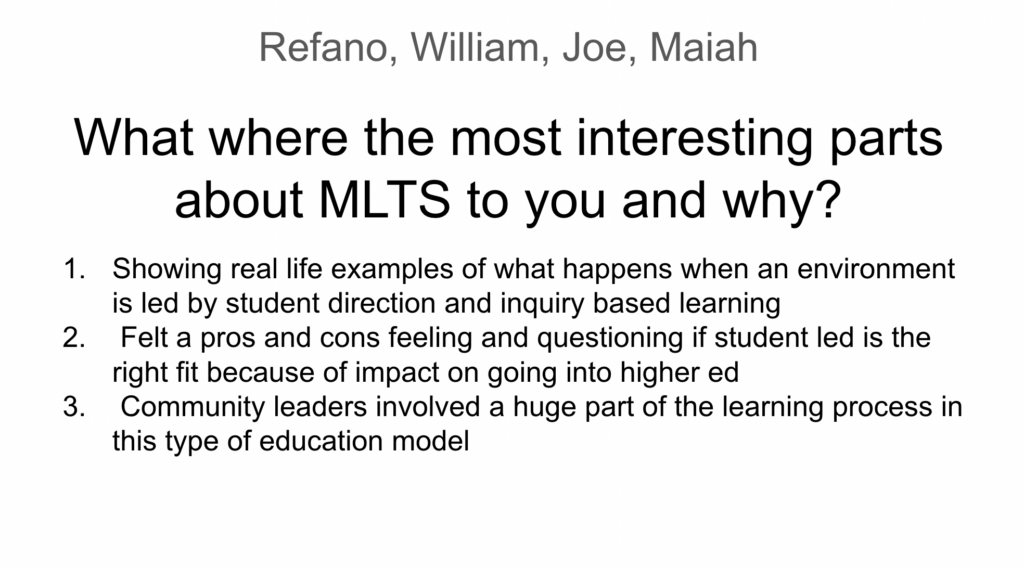
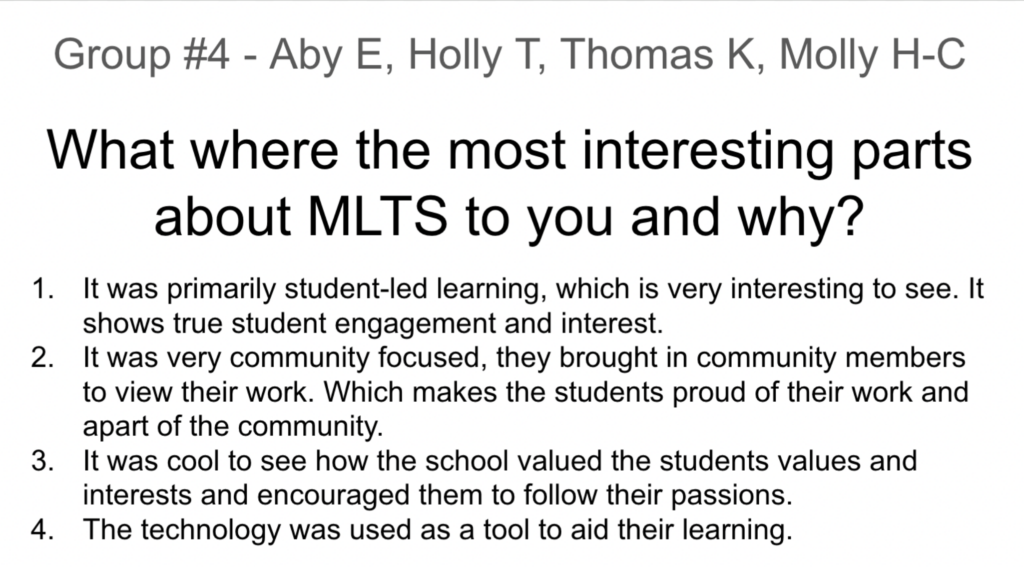
Watching Most Likely to Succeed made the ideas of student-led and inquiry-based learning feel a lot more real than just talking about them in theory. What stood out to me and to others in our class was how different the classroom environment looked when students were actually directing their own learning. One group mentioned how powerful it was to see real-life examples of what happens when learning is led by student inquiry, and I felt the same way. The students in the film didn’t seem disengaged or passive. They were curious, motivated, and clearly invested in what they were doing.
That said, the film also made me realize how hard it actually is to change pedagogy in practice. One thing that came up in our breakout room was that pedagogy works together with many other factors. To really change how teaching and learning works, a whole system needs to shift together. Universities were a big example we talked about. They tend to be very rigid, assessment-heavy, and structured around grades and deadlines, which makes inquiry-based or student-led learning harder to sustain. If higher education still values traditional measures of success, it creates pressure for K-12 schools to stick with what feels “safe.”
I also found myself feeling a bit torn, which others mentioned too. While I loved seeing real-life examples of inquiry-based learning working so well, I couldn’t help but wonder how this model fits when students transition into higher education. There are so many benefits, like collaboration, problem-solving, and confidence, but I do think age and context matter. Younger students may thrive with open-ended inquiry, while older or shyer students might need more scaffolding to navigate expectations beyond high school.
What really excited me though was how community-focused the learning was. Multiple groups pointed out how community members were invited in to view student work, and I loved that idea. It gives students a sense of pride and belonging and shows them that their work matters beyond the classroom.
At the same time, I think equity and access are important to keep in mind. Student-led learning assumes a level of confidence, support, and access to resources that not all students have. Without intentional planning, some voices could easily be overshadowed. This makes formative assessment, relationship-building, and teacher guidance even more important in inquiry-based environments.
Hearing other perspectives in our learning pod really shaped my thinking this week. It reminded me why building a strong PLN matters, because it helps surface both the excitement and the concerns instead of oversimplifying things. Learning from others makes these big ideas feel more realistic and grounded.
Here is a link to the film for anyone that wants to give it a watch.